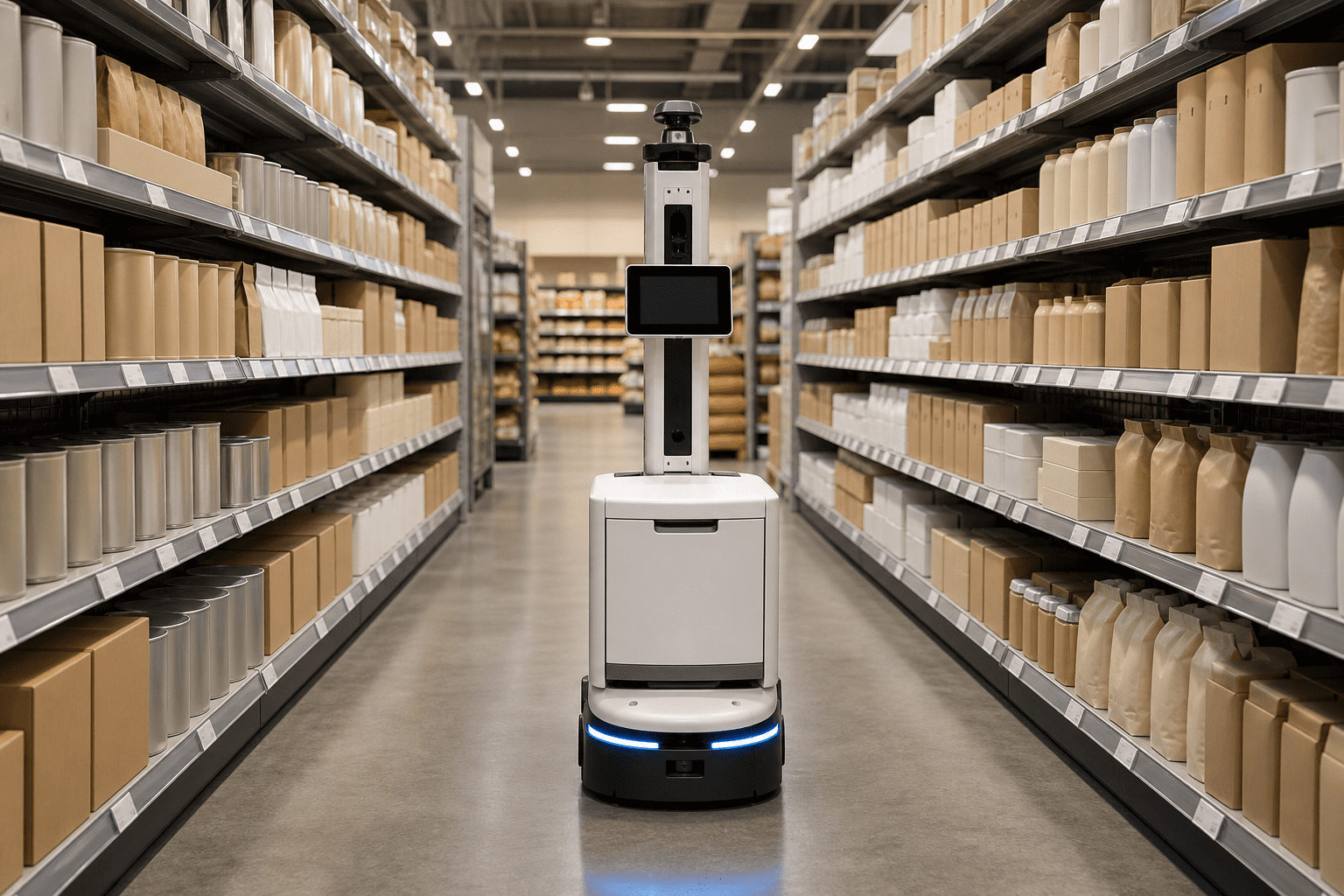
Collaborative robotic arm operating at an AI automation station in a Cape Town warehouse with Table Mountain visible.

The Business of AI Automation

In a Johannesburg logistics office, a dispatcher no longer manually reconciles delivery notes against invoices, a script does it overnight and flags exceptions by morning. In a Cape Town agency, a client's WhatsApp queries are triaged by a chatbot before a human ever sees them. AI automation in South Africa has moved past the demo stage and into the daily operations of firms trying to hold margins together against load shedding, rising input costs, and a tight skills market.

What follows is a look at how that market actually works, who is building the tools, who is selling them, who is quietly influencing which automations reach South African desks, and what a business owner should understand before signing anything.

Automation Is Already Practical

The most visible adoption is not the flashy generative AI use case. It is unglamorous business process automation: invoice capture, stock alerts, customer message routing, scheduling, internal reporting, and the endless copy-paste work that sits between systems that were never designed to talk to each other.

A Durban retailer using an AI chatbot on WhatsApp to handle order status queries is doing something quite specific, cutting the volume of calls that reach a small support team. A Pretoria finance department running workflow automation software over its accounts payable process is doing something equally specific, reducing the hours a bookkeeper spends on data entry so the same team can handle more clients without a new hire.

Local conditions shape which automations make sense. Load shedding pushes firms toward cloud-hosted tools that keep running when the office does not. The cost of skilled staff pushes small businesses toward automation earlier than they might in a cheaper labour market. Bandwidth and data costs still influence which platforms are practical, especially outside the main metros. And the rand-dollar exchange rate makes any subscription priced in US dollars a live budgeting problem, not an afterthought.

The Main Players

The corporate end of the AI automation companies South Africa market is layered. At the top sit the global platforms, Microsoft, Google, AWS, OpenAI, Salesforce, SAP, whose models, cloud infrastructure, and enterprise software underpin most serious automation projects in the country. Very little corporate AI work in South Africa happens without at least one of these names in the stack.

Below them sit the local implementation partners: the big four consulting firms, the established systems integrators, and a growing group of specialist automation houses concentrated mostly in Johannesburg and Cape Town. These are the businesses that banks, insurers, telcos, mining groups, and retailers actually contract with. They translate global platform capability into something that fits South African compliance requirements, existing legacy systems, and internal politics.

Then there is a middle layer that often gets missed, the local software vendors building South African products around automation, from accounting add-ons to HR tools to industry-specific platforms for logistics, property, or healthcare. Their advantage is context: they know local tax rules, local payroll quirks, local banking rails.

Ranking these players against each other is a mug's game. Contracts are private, market share figures are estimates, and "leader" claims usually come from the marketing departments of the firms making them. What matters more is understanding that the corporate AI market in South Africa is a supply chain, not a single tier.

The Rise of Independent Operators

Underneath the corporate market sits a fast-growing layer of independent operators, and this is where a great deal of practical automation for SMEs is actually happening. An AI automation consultant South Africa businesses hire today is often a solo practitioner or two-person shop building chatbots, integrating tools like Zapier or Make with local systems, wiring up CRMs, and putting language models to work on internal documents.

Some come from a developer background. Others are ex-marketers, ex-analysts, or ex-agency operators who saw automation as a natural extension of what they already did. They tend to work project-based or on monthly retainers, and their pricing sits well below what a large consultancy charges, which is precisely why AI automation for small business in South Africa is moving through this channel rather than through enterprise vendors.

The freelance market has real gaps. Quality varies. There is no meaningful certification that separates a competent automation builder from someone who watched a few YouTube tutorials. Handovers are inconsistent, and businesses sometimes end up dependent on a single freelancer who built something no one else can maintain. But the value is real: an owner-run business in Cape Town can get a working customer service automation live in weeks for a fraction of what an enterprise engagement would cost, and iterate from there.

Who Controls Automation Decisions

This is the question that gets less attention than it deserves. Control over AI Automation South Africa businesses adopt sits in a few specific places, and rarely with the technical staff running the systems.

At the corporate level, the decisions are made by executives and procurement teams, shaped heavily by the platform vendors and consulting partners already inside the account. If a bank runs on Microsoft, its AI automation will almost certainly be Microsoft-flavoured, because the licensing, the security posture, and the integration paths are already there. The "choice" is narrower than it appears.

At the SME level, control usually sits with the owner or the operations lead, and is shaped by whoever they trust, often an external consultant, a bookkeeper, or an agency. The tools chosen reflect that adviser's toolkit more than any independent evaluation. Whoever installs the first automation tends to install the next three.

Above all of this sit the global platforms, which control the underlying models, the pricing, the terms of service, and the pace of change. When OpenAI changes a price, when Microsoft adjusts a Copilot licence, when Google shifts a model's capabilities, South African businesses adjust. That is the real power structure, and it is worth naming plainly: the country is a customer of AI, not a producer of it, and the levers that matter most are pulled elsewhere.

Costs, Risks, and Realities

AI automation cost South Africa businesses face breaks into three parts: the software subscriptions, the implementation work, and the ongoing maintenance. Subscription costs are largely dollar-denominated and move with the exchange rate. Implementation costs vary widely. A freelancer might build a specific workflow for a modest project fee, while a corporate integration runs far higher depending on scope. Maintenance is the part most buyers underestimate; automations break when source systems change, and something has to be budgeted to keep them alive.

Vendor lock-in is a genuine risk. Building deeply into one platform's ecosystem makes switching expensive later, and platforms know this. Data control is another underdiscussed issue, sending customer information or internal documents to a foreign-hosted model has POPIA implications that most small businesses have not properly thought through. And the skills gap is real: firms that adopt automation without anyone internal who understands it end up permanently dependent on whoever built it.

None of this is a reason to avoid automation. It is a reason to go in with clear eyes about what is being bought, from whom, and on what terms.

What to Watch Next

The useful reframe is this: AI automation in South Africa is not primarily a technology story. It is a business power story. It is about which firms get access to which capabilities, at what price, on whose terms, and with whose advice.

The next few years will likely see more consolidation among local implementation partners, more specialisation among freelancers, and continued pressure from the global platforms as they push their own automation products directly to end customers. Regulation will tighten, particularly around data handling. Costs in rand terms will keep drifting upward.

For business owners, the sharper questions are not "should we use AI" but "who is deciding what AI we use, what happens if that adviser or platform disappears, and what do we actually own at the end of the contract." Those are the questions that separate a business using automation from a business being used by it.

Where Automation Ends and Relationships Begin

The South African automation market rewards clarity about what a script can and cannot do. Invoice reconciliation, WhatsApp triage, and stock alerts sit comfortably inside a workflow engine, but the higher-trust work of building genuine business relationships still depends on human judgement. A backlink exchange cannot be automated in any meaningful way, because it turns on editorial fit, reputation, and negotiation between real publishers, not on API calls. That distinction matters for owners weighing where to spend automation budget. The unglamorous back-office tasks are the ones that repay a subscription and a consultant's fee. The relational work, whether with partners, regulators, or long-term customers, remains stubbornly manual, and pretending otherwise tends to produce expensive automations that quietly damage the reputation they were meant to scale.

AI Automation Pricing In South Africa

The table compares AI automation costs in South Africa across common Automation Type categories, including workflow, chatbot, marketing, sales, CRM, document processing, robotic process automation, and data entry. Columns break down pricing by Provider Type, covering platforms, agencies, consultants, and developers. Each cell shows the typical ZAR range a buyer can expect for that combination of automation and provider.
AI Automation Prices South Africa
Automation Type AI Automation Platform Prices AI Automation Agency Prices AI Automation Consultant Prices AI Automation Developer Prices
Workflow Automation ZAR 800 – ZAR 4,000 ZAR 15,000 – ZAR 60,000 ZAR 8,000 – ZAR 25,000 ZAR 12,000 – ZAR 45,000
Chatbot Automation ZAR 600 – ZAR 3,500 ZAR 20,000 – ZAR 70,000 ZAR 10,000 – ZAR 30,000 ZAR 15,000 – ZAR 50,000
Marketing Automation ZAR 1,000 – ZAR 5,000 ZAR 18,000 – ZAR 65,000 ZAR 9,000 – ZAR 28,000 ZAR 14,000 – ZAR 48,000
Sales Automation ZAR 900 – ZAR 4,500 ZAR 16,000 – ZAR 55,000 ZAR 8,500 – ZAR 26,000 ZAR 13,000 – ZAR 46,000
CRM Automation ZAR 1,200 – ZAR 6,000 ZAR 22,000 – ZAR 75,000 ZAR 11,000 – ZAR 35,000 ZAR 18,000 – ZAR 55,000
Document Processing Automation ZAR 700 – ZAR 3,000 ZAR 14,000 – ZAR 50,000 ZAR 7,500 – ZAR 22,000 ZAR 11,000 – ZAR 40,000
Robotic Process Automation ZAR 2,000 – ZAR 10,000 ZAR 30,000 – ZAR 120,000 ZAR 15,000 – ZAR 50,000 ZAR 25,000 – ZAR 90,000
Data Entry Automation ZAR 400 – ZAR 2,000 ZAR 10,000 – ZAR 40,000 ZAR 5,000 – ZAR 15,000 ZAR 8,000 – ZAR 30,000
Prices shown are estimates aggregated from publicly available sources and reflect typical South African market ranges at the time of publication. Actual quotes can vary based on project scope, integrations required, provider experience, location, and timing, so figures should be treated as indicative rather than fixed.

AI Automation in South Africa FAQs

What does AI automation actually look like in South African businesses day to day?

It typically covers practical process work such as invoice capture, stock alerts, routing customer messages, scheduling, internal reporting, and moving data between systems that do not talk to each other. Real examples include a Johannesburg dispatcher running overnight reconciliation of delivery notes against invoices, a Cape Town agency triaging WhatsApp queries with a chatbot, a Durban retailer handling order status queries on WhatsApp, and a Pretoria finance team automating accounts payable.

How does load shedding influence which automation tools South African businesses choose?

Load shedding pushes adoption towards cloud-hosted tools that keep running when local power is unstable. Bandwidth and data costs outside the main metros also narrow the realistic options, which shapes what smaller firms outside Johannesburg, Cape Town, Durban, and Pretoria can practically run.

Who are the main players in the South African AI automation market?

The market has global platforms at the top such as Microsoft, Google, AWS, OpenAI, Salesforce, and SAP, with local implementation partners including big four consulting firms and systems integrators sitting below them. A middle layer of South African software vendors builds products for accounting, HR, logistics, property, and healthcare, and a growing layer of independent operators and two-person shops serves SMEs.

What background do independent AI automation operators in South Africa usually come from?

They tend to come from developer, marketing, analyst, or agency backgrounds. Typical work includes integrating tools like Zapier or Make with local systems, building chatbots, wiring up CRMs, and applying language models to documents, usually on project fees or monthly retainers.

What are the main risks of adopting AI automation for a South African business?

Deep integration with a single platform creates vendor lock-in that is hard to reverse. Foreign-hosted models raise data control concerns with POPIA implications, and skills gaps can leave a business permanently dependent on the builder who set the system up. Maintenance is also frequently underestimated when source systems change.

Who decides which AI automation tools get adopted inside a company?

At corporate level, control sits with executives and procurement teams, and choices are often constrained by existing platform ecosystems such as Microsoft. At SME level, owners or operations leads make the call, usually leaning on external consultants, bookkeepers, or agencies to guide the decision.

How can a business avoid becoming dependent on a single AI automation freelancer?

The freelance market has variable quality with no meaningful certification and inconsistent handovers, which is what creates the dependency in the first place. Reducing that risk means treating documentation and handover standards as part of the deliverable so another builder can maintain the work later.

Why is South Africa described as a customer rather than a producer of AI?

The underlying models, pricing, terms of service, and pace of change are controlled by global platforms based outside the country. Local activity concentrates on implementation, integration, and building South African products on top of those foreign models rather than producing the core technology.

Table of Contents

Recent Posts

Open wooden trunk holding hobby supplies like paintbrushes, yarn, camera, trowel, chess pieces, and harmonica.

All Hobbies List

An A to Z list of hobbies spanning creative, indoor, outdoor, cheap, and unusual options, plus notes on categories and choosing pursuits that fit real adult life.
Read More »
ALL TIME PAGE VIEWS: 8

This page was last updated on 22 May 2026 by u/WebsiteCatalyst.

If you have any questions, try our FAQ.