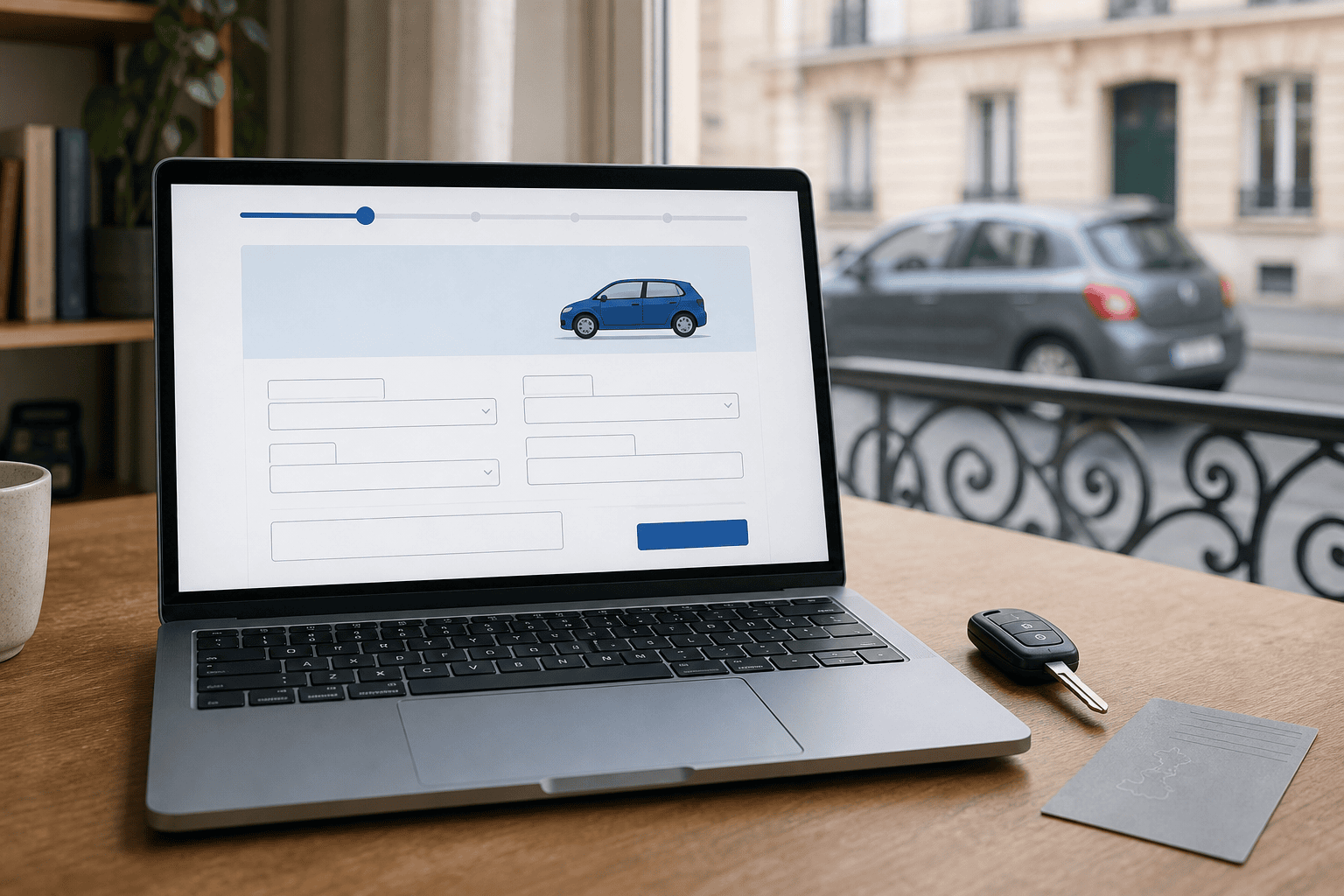
You’re scrolling a Facebook Marketplace listing at 11 p.m. The price on that sedan is low enough to make you pause, high enough to seem plausible, and the photos show a clean interior with no obvious damage. Or maybe you’re standing on a dealer lot, looking at a windshield VIN plate, trying to figure out whether the sticker story matches reality. Either way, a vehicle VIN check can confirm what the car actually is and surface what’s been recorded about it, before you waste a Saturday driving across the state or put a deposit on someone else’s problem.
That’s the real value here, turning a listing into verifiable facts. A VIN lookup can decode identity, specifications, open recalls, theft and title risk, and layers of recorded history. In a global market where enormous volumes of used vehicles change hands, private sales, dealer lots, online auctions, cross-border transactions, the 17-character Vehicle Identification Number is the closest thing to a universal key for due diligence.
But scope matters. A VIN check works with reported data. It draws from manufacturer records, DMV databases, insurance filings, inspection results, and auction logs. If an event wasn’t reported, a fender bender paid out of pocket, a flood car dried out and resold without an insurance claim, it won’t appear. That’s not a flaw in the system. It’s the nature of any record-based verification. Knowing where the data comes from helps you interpret what it tells you and, just as importantly, what it leaves out.
One more expectation to set early, free tools exist and cover meaningful ground (recalls, basic theft status, sometimes registration data), but they rarely offer the depth of a paid complete report. Neither category is a scam or a magic bullet. The question is which layer of information you need for the decision you’re making.
Decoding the 17-Character VIN
The VIN is a standardized 17-character string, letters and numbers, no spaces, assigned to every vehicle produced for road use in most countries since the early 1980s. The format follows an international standard (ISO 3779), which means a VIN decoded in the United States follows the same structural logic as one decoded in Germany or Japan. Older vehicles and some imports from countries that adopted the standard later may carry shorter or non-conforming sequences, but for the vast majority of cars, trucks, and SUVs on the road today, 17 characters is the rule.
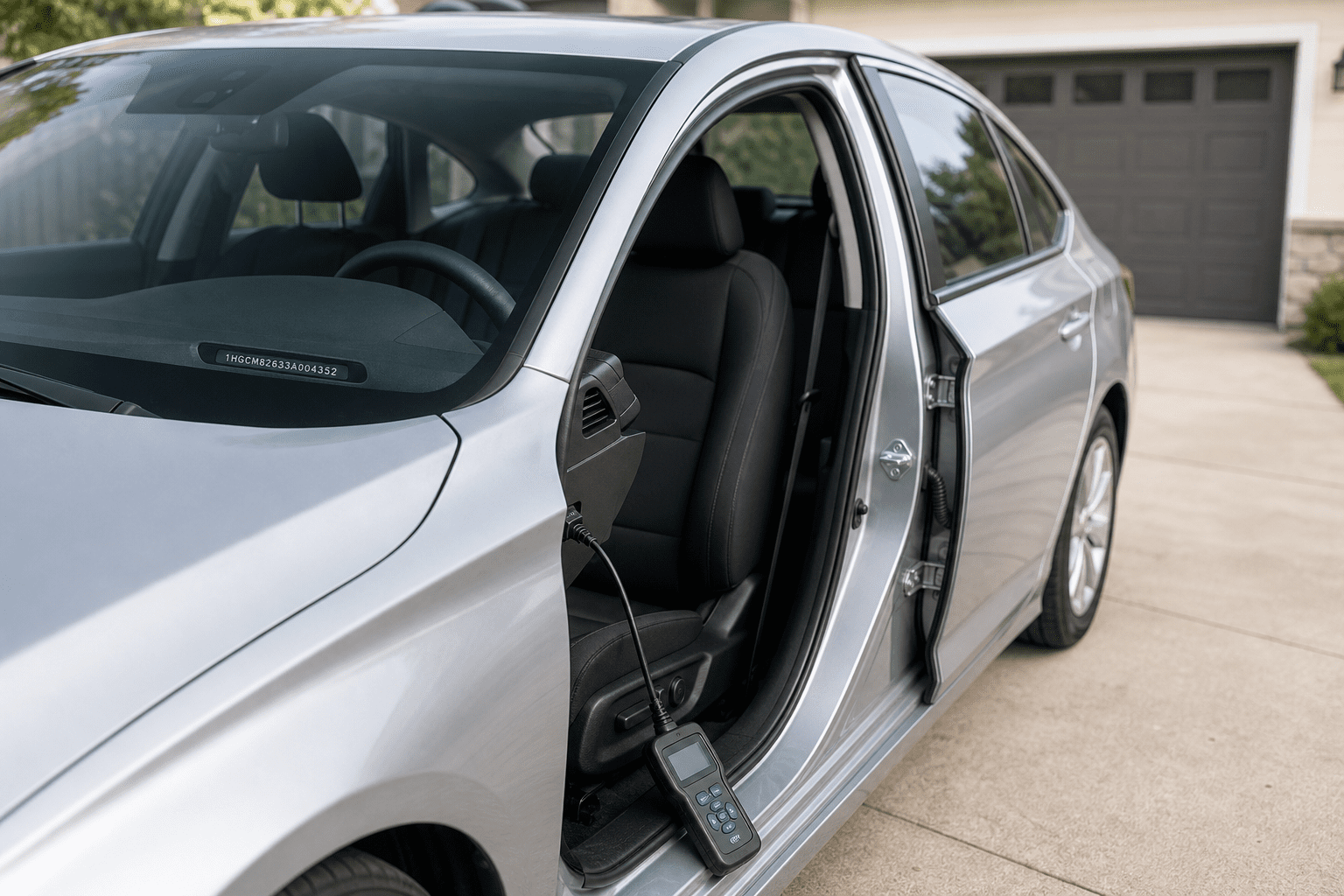
You can find the VIN in several places: the plate visible through the lower driver’s-side windshield, the label on the driver’s door jamb, the vehicle’s title or registration document, and often the insurance card. If the numbers don’t match across those locations, that’s a red flag worth stopping for. VIN mismatches between the dashboard plate and the door jamb, or between the physical car and its paperwork, can indicate a re-VIN situation, parts-car assembly, or outright fraud.
A VIN number lookup breaks the 17 characters into three segments. The first three characters form the World Manufacturer Identifier (WMI), which tells you the manufacturer and country of origin. Characters four through nine make up the Vehicle Descriptor Section (VDS), encoding attributes like engine type, body style, restraint system, and trim level. The final eight characters, the Vehicle Identifier Section (VIS), include the model year, assembly plant, and a unique production sequence number.
Decoding these segments can verify whether a listing claiming a particular engine or trim package matches what the factory actually built. It’s also how parts suppliers confirm fitment. For cross-border buyers, fleet operators, and anyone dealing with imports or exports, the international consistency of the VIN format makes verification possible across jurisdictions, though grey-market imports, re-VIN fraud, and the limitations of local databases mean international checks aren’t smooth.
History Reports and Free-Tool Limits
A vehicle history report by VIN compiles data from multiple sources into a single narrative about a car’s past. Title events are among the most consequential entries: they track when ownership transferred, whether a salvage or rebuilt title brand was applied, and whether a lien was recorded against the vehicle. Registration records show where the car was registered and, in many states, trigger odometer readings at each renewal, creating a mileage timeline that can reveal gaps or rollbacks.
Accident records appear when insurers or collision repair facilities report them. Airbag deployment, structural damage estimates, and total-loss declarations may all show up, but only if someone filed a claim or submitted data to one of the reporting aggregators. A car that was rear-ended and repaired at a small independent shop, paid for in cash, may carry no accident record at all. That’s a common and legitimate gap.
Service and maintenance records vary even more. Some dealerships and chains report oil changes, brake jobs, and warranty repairs. Independent mechanics rarely do. Auction notes, when present, can include condition grades, announced defects, and sale prices, useful context for vehicles that passed through wholesale channels. Emissions and safety inspection results are available in states that run those programs but absent in states that don’t.
The distinction between a free VIN check and a paid report matters here. Free tools tend to cover narrow, high-reliability data: the NHTSA recall database, the NICB theft database, and sometimes basic registration or title status. A free vin check can answer “Does this car have an open recall?” and “Has it been reported stolen?” with reasonable confidence. It typically can’t give you the full accident, title-brand, and odometer timeline that a paid complete report provides. The gap isn’t about free tools being unreliable, they’re accurate within their scope, but about scope itself.
Theft, Title, and Odometer Red Flags
A stolen vehicle VIN check queries databases like the National Insurance Crime Bureau’s records. A clean result means the VIN hasn’t been reported stolen through channels that feed that database. It doesn’t guarantee the car was never stolen, reporting delays exist, and not every theft is entered promptly. Cross-referencing title status and registration history adds another layer of confirmation, but timing gaps remain a real limitation.
Odometer discrepancies follow recognizable patterns. A vehicle showing significantly fewer miles than a previous record, say, a registration renewal logged higher mileage two years ago than the current listing claims, suggests rollback. Conversely, a car with suspiciously low mileage for its age and no service history to explain light use deserves scrutiny. Digital odometers are easier to tamper with than older mechanical ones, which makes the recorded mileage trail in a history report more important, not less.
The phrase “no accidents reported” means exactly that, no accidents were reported through the data sources the report aggregates. It does not mean no accidents occurred. A VIN check for accidents is valuable for what it surfaces, but treating a clean report as proof of a damage-free life is a mistake buyers make routinely.
Title brands carry specific meanings. Salvage indicates an insurer declared the vehicle a total loss. Rebuilt means it was repaired and re-inspected after a salvage declaration. Flood, lemon, taxi, police, and fleet designations each signal something about the car’s use or condition history. State-by-state reporting differences complicate this: a car titled as salvage in one state can sometimes be re-titled as clean in another with less stringent rules. Multi-state vehicles create both richer data trails and more opportunities for information to fall through cracks. A VIN check by state may return different results depending on which databases a given service queries.
Buyer’s VIN Decision Framework
The most useful way to treat VIN results is as a sequence of filters, each narrowing your risk before you commit time or money.
Start by confirming the VIN on the vehicle, dashboard, door jamb, matches the documents the seller provides. If they don’t match, the conversation is over. Next, decode the VIN to verify listing claims. A seller advertising a top-trim package with a specific engine should match what the VDS characters say the factory built. Discrepancies here range from innocent mislabeling to deliberate misrepresentation.
Check for open recalls through the manufacturer’s recall database. Some recalls are minor; others involve safety-critical systems like airbags or fuel lines. The severity of an unresolved recall should factor into your decision and your negotiation. Then check theft and title status through whatever databases are available to you, free tools cover this reasonably well for a first pass.
Review the history signals: mileage continuity across entries, title events that make sense chronologically, accident records that match the car’s visible condition. A vehicle that’s been through three auctions in 18 months, carries a rebuilt title with no supporting repair documentation, or shows mileage that jumped backward between entries is telling you something. Listen.
Red flags that should end the conversation outright: VIN mismatches between the car and its paperwork, title-brand inconsistencies that suggest state-shopping, unexplained mileage drops, a seller who won’t share the VIN before you show up, and rebuilt titles with zero documentation of what was repaired. These aren’t negotiation points. They’re exits.
The purpose of all this isn’t to build a prosecution file. It’s to ask better questions. A history report that shows a single minor accident three years ago isn’t a deal-killer, but it is a reason to look more carefully at the repair, ask the seller about it, and factor it into your offer.
Pre-Purchase VIN Check Steps
A VIN check reduces uncertainty. It doesn’t replace a test drive, a pre-purchase inspection by an independent mechanic, or a careful review of the title and registration documents in your hand. Think of it as the fastest, cheapest filter in a layered process, the step that can save you from wasting money on travel, inspection fees, and paperwork for a vehicle that never should have made it past your initial screen.
Before committing to any used vehicle, check the VIN number before buying by running at minimum three passes: decode the VIN to confirm identity and specs, check the NHTSA database for open recalls, and query a theft database. If the car passes those filters and you’re still interested, a paid history report is worth the modest cost for the title, odometer, and accident timeline it provides. If anything in that report contradicts what the seller told you, you have your answer.
Vast numbers of used vehicles are in circulation worldwide. The 17-character international standard stamped into every modern car exists precisely because this market is too large and too fast-moving for trust alone. Use the number. Read the results carefully. And remember that what a report doesn’t show matters as much as what it does.