Eight hours into a delivery route, every bump registers in your lower back. The foam is flat, the bolster is gone, and you’re shifting your weight every few minutes just to stay comfortable, except comfortable stopped being an option somewhere around hour three. When you start searching for truck seats for sale, what greets you is a sprawling mix of aftermarket options, salvage-yard pulls, suspension upgrades, and OEM replacements spanning pickups, work trucks, and Class 8 semis. Before you click on a single listing, it pays to know what you’re actually shopping for, because fit, comfort, and durability vary wildly, and the wrong seat costs you twice.
Why Drivers Replace Seats
Most seat replacements aren’t cosmetic choices. They’re forced by wear that’s gone past the point of a cover-up. Foam compresses over tens of thousands of miles until it bottoms out against the seat pan. Vinyl cracks along stress lines. Reclining mechanisms seize or lose their detent. Air-suspension bases develop slow leaks that drop the seat to its lowest position mid-route. Seatbelt pre-tensioners and occupancy sensors throw codes that won’t clear with a reset.
For fleet operators, the triggers are often operational: driver fatigue complaints, high turnover linked to cab comfort, or a cab refresh ahead of resale. For owner-operators and contractors, it’s usually simpler, the seat hurts.
What all of these triggers share is the same implication: a truck seat is a tool you physically use for hours at a stretch. Buying one is buying contact time. That reframes the purchase away from appearance and toward ergonomics, material durability, and how the seat handles the specific kind of driving it’s going to see. Keeping that frame in mind prevents the most common mistake, grabbing whatever’s cheapest and available.
Seat Categories by Job
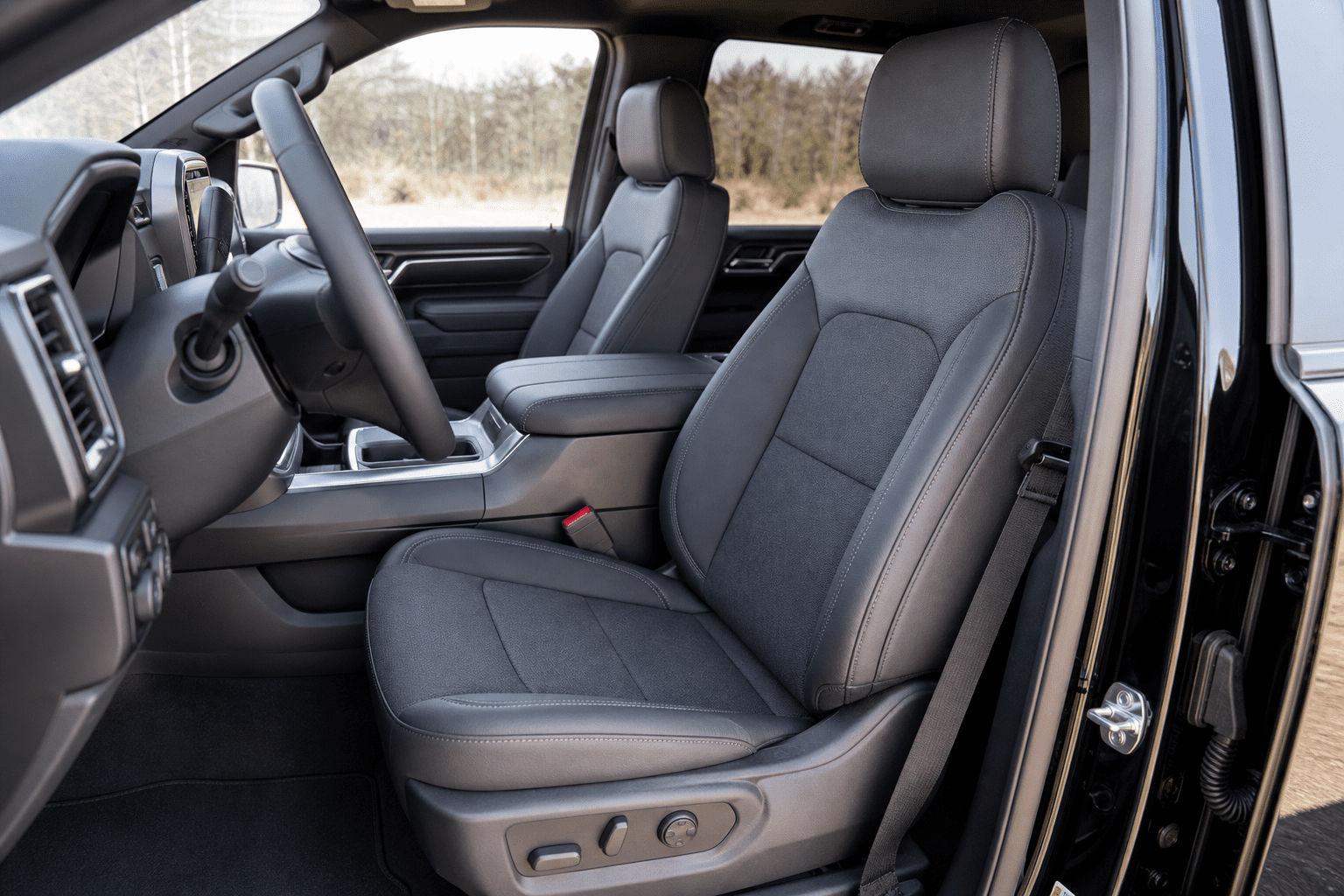
Seat style should follow cab configuration and workload, not preference alone. A truck bench seat replacement makes sense in work trucks where the center position carries a third passenger or where simplicity and cleanability matter more than individual adjustability. Bucket seats offer per-driver adjustment, better bolstering on turns, and usually a center console, but they eliminate that middle seating position entirely, which changes how crew-cab pickups function on job sites.
Suspension seats occupy a different tier. They matter most where road surfaces are rough, where the truck is a vocational vehicle bouncing across gravel or washboard, or where a driver is logging enough highway miles that vibration fatigue becomes a real concern. An air-suspension base isolates the seat from chassis movement in ways a standard mount can’t. For anyone searching semi truck seats for sale, suspension isn’t optional, it’s standard equipment, and the question becomes whether to repair or replace the existing base or upgrade to a different travel range, damping rate, or weight setting.
Semi cabs add constraints that pickups don’t share: seat height relative to steering wheel clearance, air-line plumbing for the suspension base, swivel mechanisms for sleeper access, integrated seatbelts mounted to the seat frame rather than the B-pillar, and armrest geometry that has to clear the door panel and console. If your use case is a pickup driven on paved roads, start with a quality bucket or bench matched to your cab. If it’s a vocational truck on rough terrain, prioritize suspension travel. If it’s a semi, treat the seat as part of a system, base, frame, adjustments, belt, air supply, and source accordingly.
Fitment and Material Choices
The word “universal” appears on a lot of aftermarket truck seats. It rarely means what it promises. Mounting rails have specific bolt spacing. Seat height affects steering-wheel clearance, mirror sightlines, and pedal reach. Power connectors for lumbar, heating, and ventilation differ by manufacturer and model year. Vehicles with side-impact airbags in the seat or occupancy-sensor wiring need those systems to remain functional, or at minimum, not throw persistent warning lights. Thinking of fitment as a compatibility problem rather than a bolt-on task saves returns and rework.
Materials shape the daily experience. Fabric breathes but stains. Vinyl cleans easily but gets hot in summer and cold in winter. Leather splits the difference on aesthetics but needs conditioning and still suffers in temperature extremes. For anyone considering truck leather seats for sale, factor in the climate and whether the cab has ventilated-seat capability. Foam density and bolster firmness determine how the seat feels at hour one versus hour eight. A seat with aggressive side bolsters suits highway driving and off-road terrain but can feel confining during stop-and-go routes where you’re climbing in and out frequently.
Over the past decade, seat manufacturers have invested heavily in pressure distribution, vibration damping, and adjustable lumbar mechanisms. An excellent truck seat built on modern design principles spreads load across a broader area of the seat pan and backrest, reducing the hot spots that cause fatigue. For fleet and long-haul operations, these aren’t luxury features, they directly affect alertness, driver satisfaction, and the frequency of comfort-related complaints.
New vs. Used Tradeoffs
Used truck seats for sale fill a real gap. Hard-to-find OEM seats for older pickups, budget-friendly replacements for work trucks that are themselves near end-of-life, or temporary seats while a rebuild is underway, all legitimate reasons to buy used. Pickup truck seats used in moderate conditions for a reasonable number of miles can have plenty of life left, especially if the foam hasn’t bottomed out and the frame shows no cracks or corrosion.
The risks, though, are specific. Foam collapse isn’t always visible under upholstery. Frame fatigue can hide behind covers. Air-suspension bases may hold pressure on a test but leak slowly under sustained load. Odors from smoke, pets, or mold can be embedded in foam that no surface cleaning will fix. Hardware goes missing, track bolts, trim clips, wiring harness plugs, and replacements aren’t always available individually. And “fits all models” on a used listing is even less reliable than on a new one.
Refurbished seats sit in between. Re-foaming, recovering, and rebuilding suspension bases are all viable processes, but what “refurbished” means varies enormously by seller. Verify whether the foam was actually replaced or just topped, whether the cover is new material or a cleaned original, and whether suspension components were rebuilt with new seals and bladders.
For fleet operators, the seat decision scales. Fleets that standardize cab seats across mixed-age lineups often see fewer driver comfort complaints and lower seat-related maintenance demands over time. Emerging options, recycled textiles, plant-based foam compounds, modular covers designed for field replacement, are extending seat life and reducing long-term cost per mile. Searching for cheap truck seats for sale is understandable, but the cheapest seat that fails in six months is more expensive than a mid-range seat that lasts four years.
Evaluating Listings Wisely
A listing worth your time includes the exact make, model, and year range the seat fits. It states whether mounting rails are included. It shows the seat from multiple angles, including the underside, the frame, and the adjustment mechanisms. For suspension seats, it specifies whether air components are functional and tested. Return terms are stated clearly, not buried in fine print.
What a listing says matters, but so does what you ask. Provenance, where the seat came from, how many miles it saw, whether it was pulled from a wrecked vehicle or a routine decommission, tells you about hidden stress. Smoke and pet exposure affect foam and fabric in ways photos can’t show. If the seat has been rebuilt, ask what specifically was replaced. If hardware is missing, find out whether it’s available before you commit.
Think of this as a confidence lens. A seller who can answer these questions clearly and show detailed photos is offering transparency. One who can’t, or won’t, is offering risk. Truck bucket seats for sale from a reputable source with full documentation are almost always a better value than a vague listing at half the price. Truck suspension seats for sale deserve even more scrutiny, since the mechanical components add failure points that a static seat doesn’t have.
Matching Seats to Workdays
The selection process, stripped down, follows a short path: identify your use case, match it to a seat category, confirm physical fitment to your cab, choose materials and ergonomic features that suit your driving pattern, and then decide whether new, used, or refurbished fits your risk tolerance and budget.
That mental model works whether you’re outfitting a single pickup or spec’ing seats across a fleet. It works whether you’re browsing truck seats for sale online, walking a salvage yard, or talking to a specialty upholstery shop. The drivers who end up satisfied are the ones who treated the seat as what it is, a piece of equipment they’ll use for thousands of hours, and evaluated it with the same seriousness they’d give any other tool that affects their workday.
Fewer regrets start with clearer criteria. Know what fits, know what you need, and let the listing prove itself to you, not the other way around.