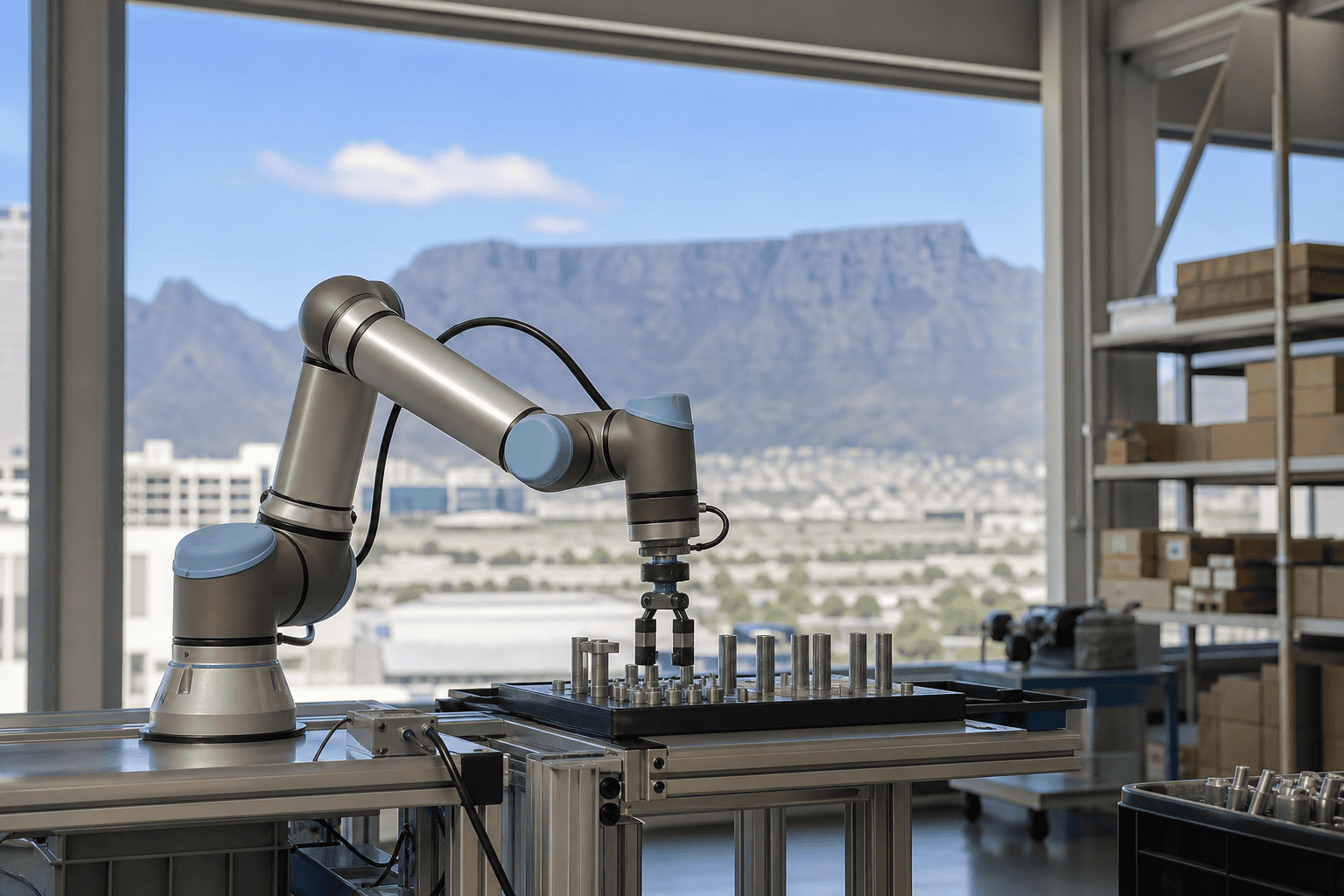
The Business of AI Automation in South Africa
Examines how AI automation actually operates in South Africa, from global platforms and consulting partners to freelance builders, and who really controls adoption decisions.

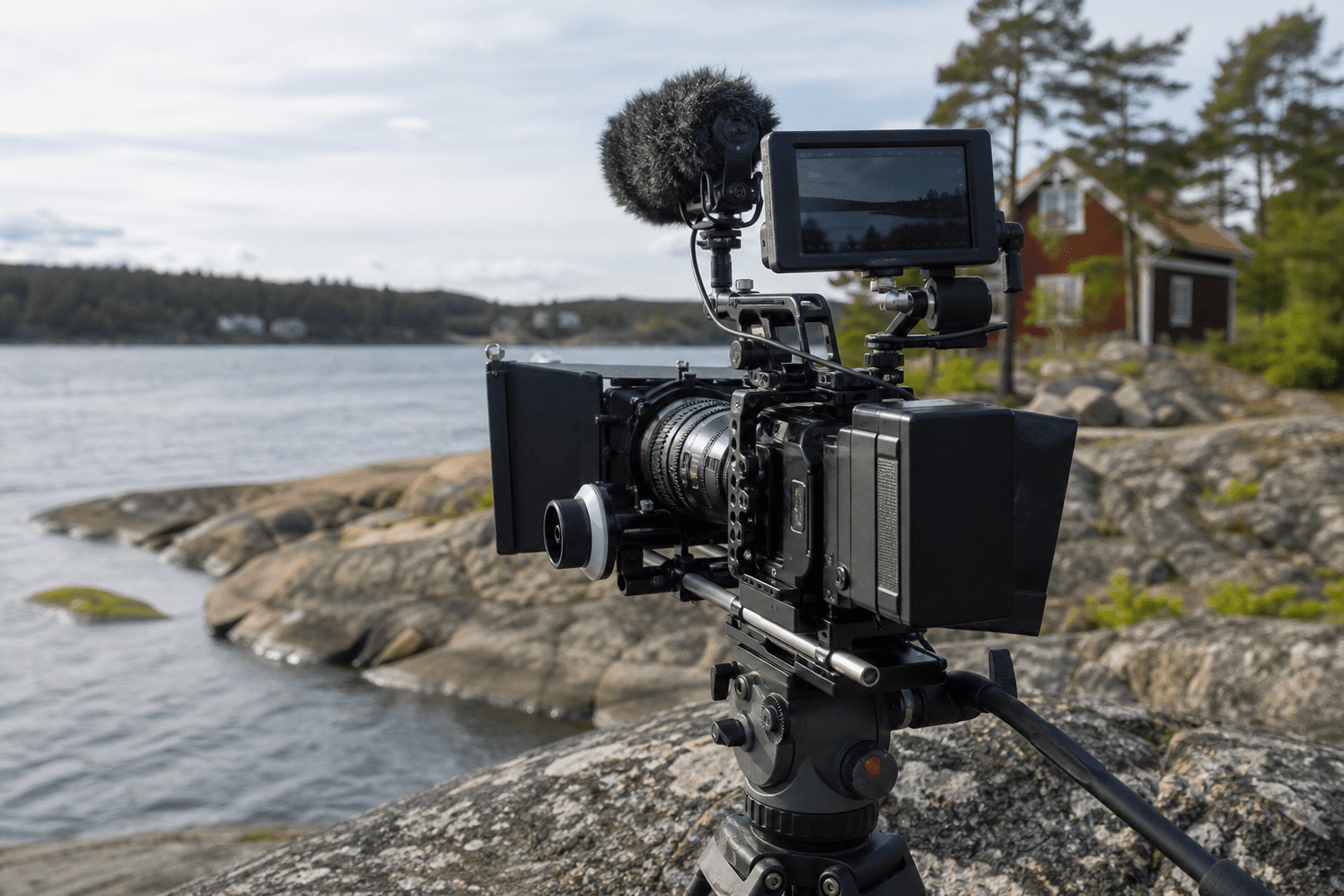
A corporate interview shoots in a Stockholm office between nine and eleven, while a second unit picks up exterior b-roll along the waterfront before the winter light fades around two in the afternoon. By mid-afternoon, the gear is loaded into a car and the crew is driving south for a factory walkthrough the next morning. That's a fairly ordinary day for video production Sweden teams, and it sets up what the phrase actually means on the ground: a specific kind of light, a specific geography, a small and flexible crew structure, and the mobility to move productions across the country, and increasingly across Europe, without dragging a studio behind them.
Nordic light shapes everything. In summer, usable daylight stretches well into the evening, which opens up long shooting windows for exteriors, tourism work, and anything that needs natural light. In winter, the opposite is true: in Stockholm, daylight is short and low-angled, and further north it shrinks dramatically. That single fact drives schedules. Outdoor scenes are blocked first. Interview setups that can run on controlled lighting get pushed to the dark hours. Travel days are planned around when there's any light left to drive in. A producer who ignores the season ends up paying for it in overtime or in flat, gray footage that doesn't cut together.
Seasonality also dictates look. Snow and bare birch trees read very differently than the green archipelago summers used in tourism films. Many brands deliberately shoot in shoulder seasons, late spring, early autumn, because the imagery feels Scandinavian without being locked to a specific holiday or campaign window.
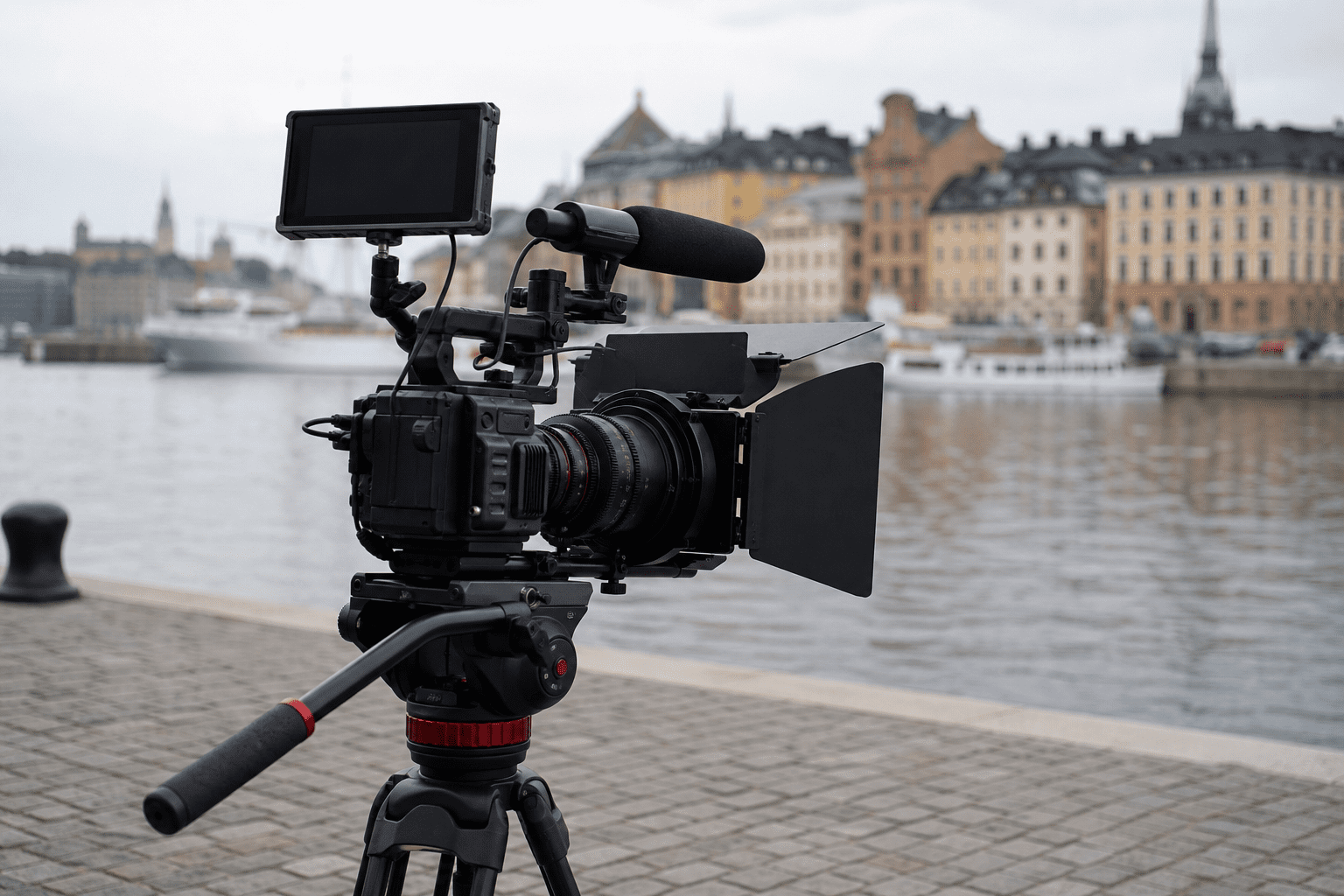
Stockholm is the center of gravity. Most companies offering video production sweden crews are based around have access to the country's deepest pool of camera operators, sound recordists, gaffers, colorists, and post talent, plus the rental houses that supply cinema cameras, lenses, lighting, and grip. Corporate headquarters, agencies, and broadcasters cluster there, so a lot of commercial and corporate work simply happens where the clients are.
Gothenburg is the second hub. A Gothenburg video production company will often serve the automotive, manufacturing, and port-adjacent industries on the west coast, and the city is a practical base for shoots that need to reach Denmark, Norway, or the western archipelago without routing through Stockholm. Malmö and the Öresund region work similarly for projects oriented toward Copenhagen.
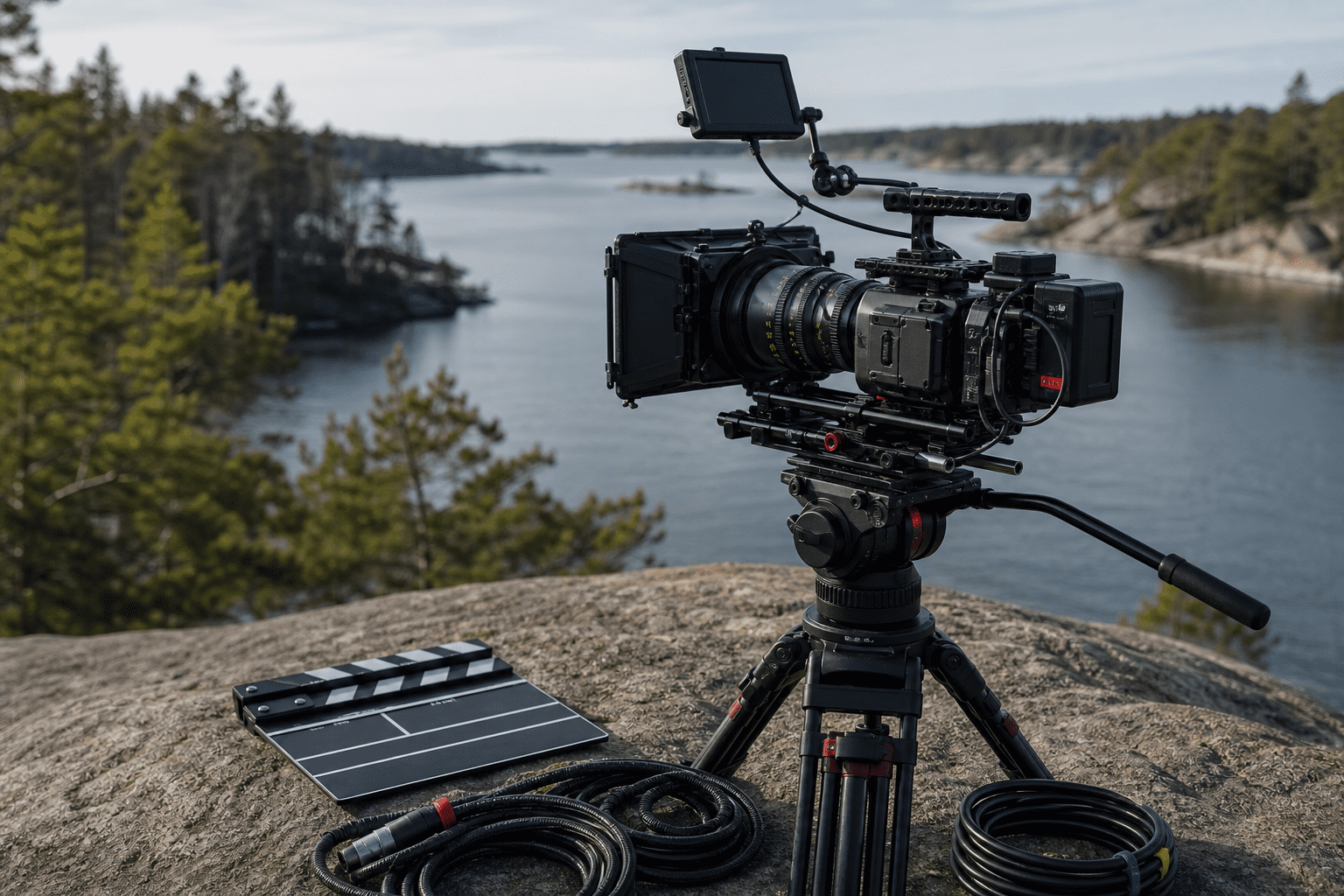
Outside the cities, things change. Lapland, the high coast, the lake districts, and the smaller coastal towns offer locations that don't look like anywhere else, and they're often easier to permit and cheaper to shoot in than central Stockholm. The tradeoff is travel: crew, gear, and talent all have to get there, and weather contingencies have to be built into the schedule. For tourism boards, outdoor brands, and any project that needs landscape rather than skyline, the extra travel day usually earns its keep.
Swedish production leans on freelancers. Rather than large standing studios, most projects are assembled by a producer or small core team who book specialists per shoot, director of photography, sound, gaffer, makeup, editor, colorist, motion designer. The same names recur across companies because the freelance pool in each city is relatively small and well-networked. That has practical consequences. Crews scale cleanly: a one-camera interview day might need three people, a commercial with talent and lighting might need ten or twelve, and the same producer can staff both. Quality is consistent because the senior freelancers have worked together for years.
It also means experience matters more than a company logo. A team led by an experienced producer, drawing on trusted freelancers, will deliver a different result than a team assembled ad hoc, even if both nominally offer the same services. This is the model most Swedish video production agency setups actually run on, whether or not they describe themselves that way.
The bulk of commissioned work falls into a few categories. Corporate video covers internal communications, recruitment films, leadership interviews, and investor updates. Commercial work spans broadcast spots, social cutdowns, and brand films. Event coverage handles conferences, product launches, and sponsorships, usually with multi-camera setups and same-week edits. Tourism and tech sit somewhere in between, often blending location filming with interviews and graphics.
Then there's animation video production Sweden teams turn to when filming is the wrong tool. If a subject can't be photographed, a software interface, a chemical process, a financial concept, an architectural project that doesn't exist yet, 2D or 3D animation and motion design do the job better and often cheaper than building sets or staging shoots. Animation also wins when a video needs to be localized across many markets: swapping voiceover and on-screen text is far easier than reshooting. A lot of Swedish productions are now hybrid, with live-action interviews carrying the human element and motion graphics handling data, diagrams, or product visualization.
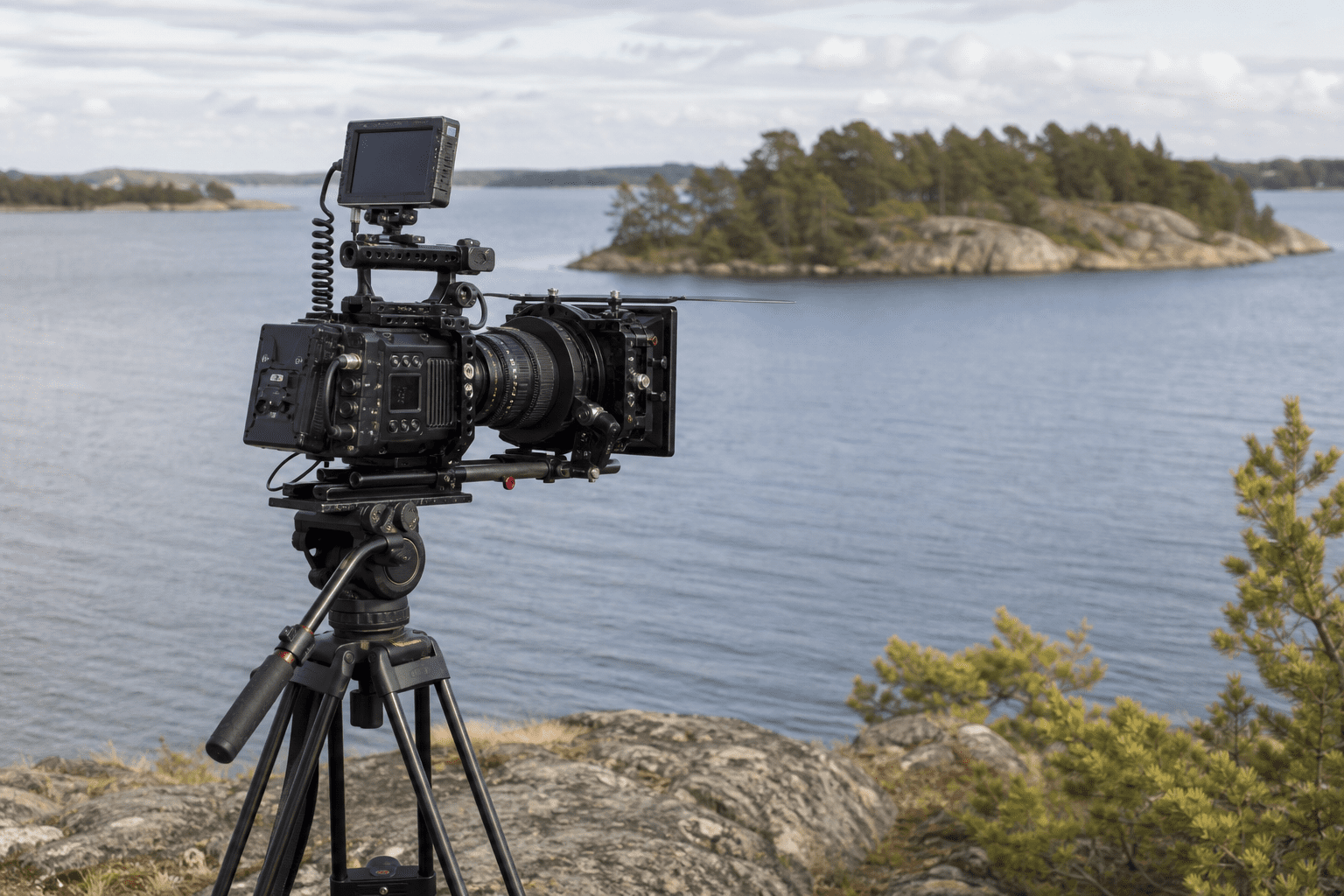
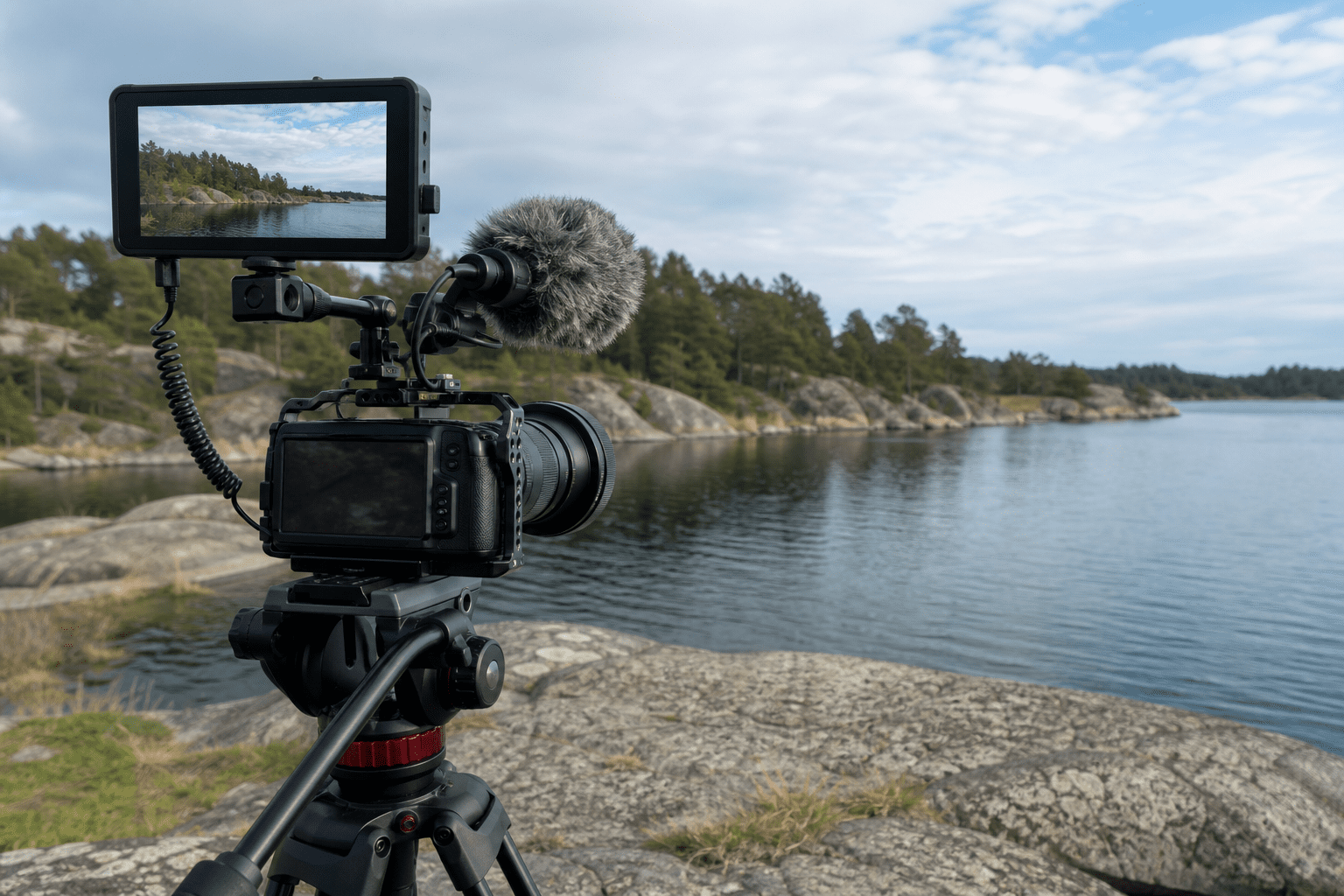
The practical shift in recent years is mobility. A small experienced crew with current cinema cameras, lenses, lighting, audio, and a gimbal or two can fit everything into a car and drive to a shoot anywhere in Sweden, or anywhere in Europe. That changes what's possible for clients. A brand based in Stockholm can shoot in Berlin, Amsterdam, or Milan with the same core team, without flying crew and freighting gear. A Swedish company doing a pan-European campaign can use one production unit across multiple countries and keep the look consistent.
The planning realities still apply. Weather is the biggest variable: rain, snow, and wind can move a shoot day, so outdoor schedules need buffer days. Permits vary by city and by location, central Stockholm streets, public transit, and protected nature areas all have their own rules, and European countries each have their own permitting layers on top. Sound is a constant battle in winter because heated indoor spaces are noisy with ventilation, and outdoor sound picks up wind quickly. Multilingual shoots add coordination: a Swedish-language interview and an English-language interview with the same subject often need to be scheduled back-to-back while the lighting and framing are set.
Travel days cost real money and real time. A two-day shoot in northern Sweden is usually a four-day commitment once driving and setup are counted. Honest scheduling reflects that.
Video production cost Sweden estimates vary widely, and anyone giving a single number without knowing the project is guessing. The real drivers are crew size, shoot days, location count, travel, talent, gear tier, and post-production scope. A single-camera interview day in Stockholm with a small crew, edited into a few short deliverables, sits at one end of the range. A multi-day commercial with a director, full lighting package, professional talent, multiple locations, color grading, sound design, and motion graphics sits at the far other end. Animation is priced by complexity and minutes of finished output, and revisions are usually the variable that pushes budgets.
For scoping, the useful exercise is to define the deliverables first, how many videos, how long, where they'll run, in how many languages, and then work backwards into shoot days and post. Sweden's operational advantage is that a mobile, freelancer-led model can deliver serious production value without the overhead of a large studio, and can do it across borders when the project calls for it. The aesthetic, the light, the locations, the restraint, is real. But the reason a lot of work gets done here is that the logistics, when planned honestly, actually work.
| Project Type | Hourly Production Prices | Half-Day Production Prices | Full-Day Production Prices | Two-Day Production Prices | Three-Day Production Prices |
|---|---|---|---|---|---|
| Corporate Video Production | $150 – $350 | $600 – $1,200 | $1,200 – $2,500 | $2,200 – $4,500 | $3,200 – $6,500 |
| Commercial Video Production | $200 – $450 | $800 – $1,500 | $1,500 – $3,000 | $2,800 – $5,500 | $4,000 – $7,500 |
| Event Video Production | $180 – $400 | $700 – $1,400 | $1,400 – $2,800 | $2,600 – $5,000 | $3,800 – $7,000 |
| Explainer Video Production | $160 – $380 | $650 – $1,300 | $1,300 – $2,600 | $2,400 – $4,800 | $3,500 – $6,800 |
| Interview Video Production | $120 – $280 | $500 – $1,000 | $1,000 – $2,000 | $1,900 – $3,800 | $2,800 – $5,500 |
| Animated Video Production | $250 – $550 | $1,000 – $2,000 | $2,000 – $4,000 | $3,800 – $7,500 | $5,500 – $10,500 |
Nordic light shapes the schedule, with long summer daylight giving extended windows for exterior work and short, low-angled winter daylight in Stockholm pushing interviews into dark hours and requiring outdoor scenes to be shot first. Late spring and early autumn shoulder seasons produce imagery that reads as Scandinavian without tying footage to specific holidays. Weather variability also makes buffer days a standard part of planning.
Stockholm acts as the primary hub, holding the largest pool of camera operators, sound recordists, gaffers, colorists, editors, and rental houses supplying cinema cameras, lenses, lighting, and grip. Gothenburg serves as the second hub for automotive, manufacturing, and port-adjacent industries, with access to Denmark, Norway, and the western archipelago. Malmö and the Öresund region support work oriented toward Copenhagen.
Swedish productions rely on freelance specialists assembled per shoot by a producer or small core team. Crews can scale from a small interview unit to a larger commercial crew with dedicated roles for camera, sound, lighting, and production. Consistency is often maintained through repeated collaboration among the same networked freelancers.
Animation is chosen when a subject such as a software interface, chemical process, financial concept, or future architectural project cannot be photographed. It is also used when localization across markets requires only voiceover and text swaps rather than reshoots. Hybrid productions can combine live-action interviews for the human element with motion graphics for data, diagrams, and product visualization.
A mobile approach can fit camera, lighting, audio, and stabilization gear into a car so a small crew can drive within Sweden or to other European cities. Permit rules vary across central Stockholm streets, public transit, and protected nature areas, and requirements differ further by country. Travel days can extend commitments, turning a short shoot into a longer trip once driving and setup are included.
Remote areas such as Lapland, the High Coast, and smaller coastal towns offer distinctive landscapes and can be easier to permit, but they require more travel for crew, gear, and talent. Weather contingencies often need to be built into the schedule. Plans typically account for the added driving and setup time these trips demand.
Deliverables are typically defined by quantity, length, distribution channels, and languages before dates are locked. From that definition, the schedule can be built backward to determine shoot days and post-production needs. This approach helps keep timing aligned with realistic travel and setup requirements.
Heated winter indoor spaces often have noisy ventilation that interferes with clean dialogue capture, while outdoor sound can be disrupted by wind. Tight schedules for multilingual interviews under fixed lighting can add pressure and reduce flexibility on the day. These constraints are typically addressed through crew planning and buffer time.
Recent Posts

Examines how AI automation actually operates in South Africa, from global platforms and consulting partners to freelance builders, and who really controls adoption decisions.

Covers the ANTS platform, private upload services, required documents for used and imported vehicles, processing timelines, and typical causes of file rejection.
Covers on-site service across Pinellas County for AC failures, stuck slide-outs, and appliance issues, plus how mobile inspections and cost factors compare.
Covers efficiency assessments, integration depth, workforce shifts, and pricing ranges that determine whether AI projects help non-tech businesses or get shelved.

An overview of Denver hydration drips, Myers Cocktails, NAD+ infusions, and hangover bags, with notes on altitude context, mobile versus clinic options, and costs.

An A to Z list of hobbies spanning creative, indoor, outdoor, cheap, and unusual options, plus notes on categories and choosing pursuits that fit real adult life.
Covers turn-based formats like Skribbl.io and Gartic Phone alongside simultaneous AI-narrated play in Paint Your Date, and which fits parties, coworkers, or couples.
How a roofing directory narrows local contractors by ZIP code, vetting signals like licensing and reviews, and the split between quotes and emergency repairs.

This page was last updated on 22 May 2026 by u/WebsiteCatalyst.
If you have any questions, try our FAQ.
I need an SEO wingman