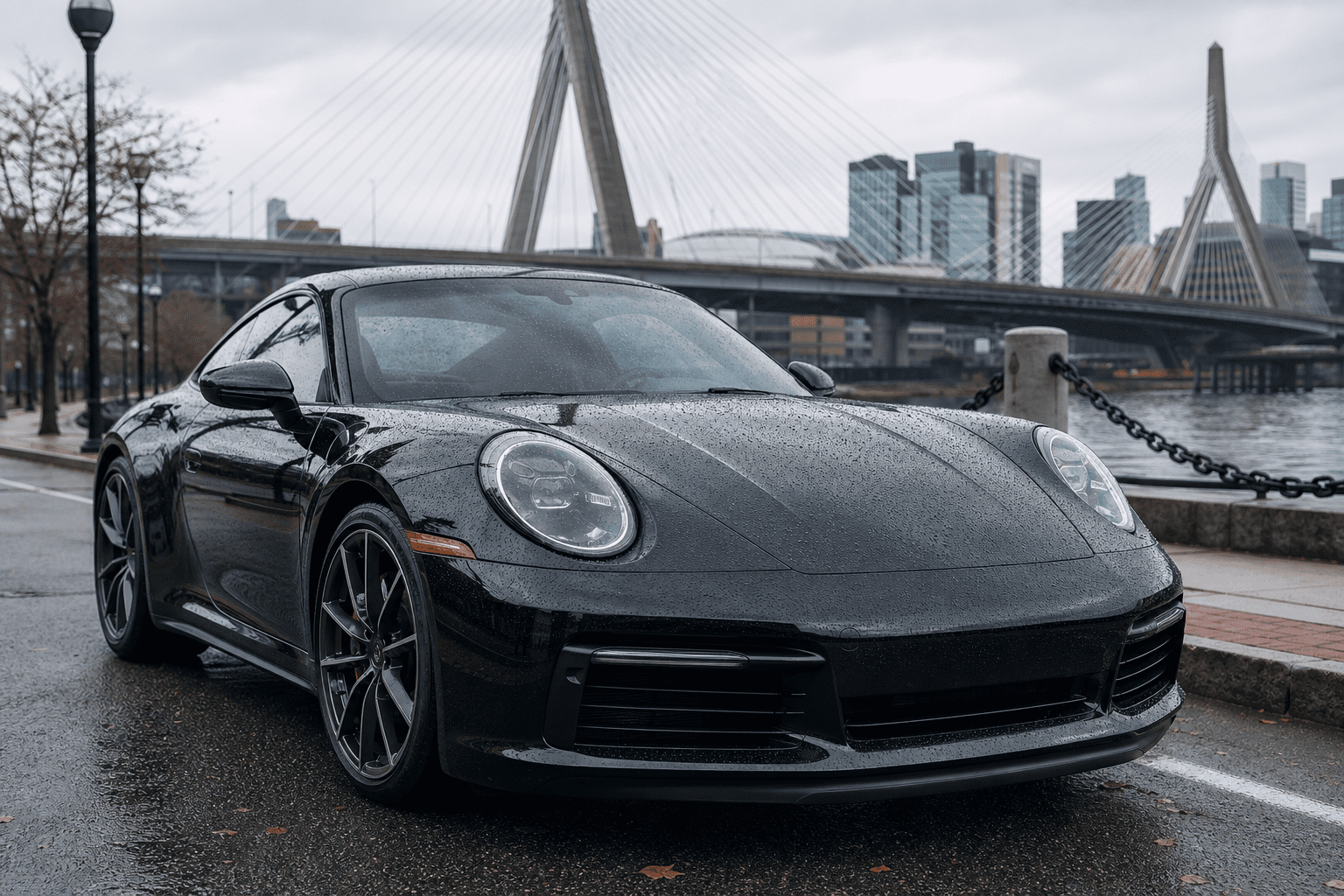
Ceramic coated black Porsche 911 with water beading on hood parked near Boston's Zakim Bridge waterfront.

Ceramic Coating in Boston

A late-January drive on I-93 tells you everything about what Boston does to a car. Brown slush sprays across the hood, brine cakes the lower panels, and by the time you exit, the paint has absorbed a layer of salt that will sit there until the next wash. That daily exposure, combined with grit kicked up on the Mass Pike, UV bleaching in summer, and the kind of parallel parking that leaves door dings as a matter of routine, is the real reason ceramic coating Boston searches keep climbing. The question underneath them is whether ceramic coating, paint protection film, or windshield protection film actually shields a vehicle enough to justify what they cost.

That question deserves a straight answer rather than a brochure one. Coating is useful. It is not magic. And in a city that punishes paint from October through April, the honest framing is layered protection, knowing what each product does, where it stops, and which combination fits how you actually drive.

How Boston Winters Change Things

Ceramic coating Boston winter exposure is a category of its own. Road salt is hygroscopic, meaning it pulls moisture against the paint and accelerates oxidation and corrosion at any chip or scratch the surface already has. Freeze-thaw cycles work brine deeper into seams. Plows kick up a slurry of sand and de-icer that sandblasts rocker panels and lower doors. Drivers respond by washing more often through winter, which is the right instinct, but repeated washing, especially automatic tunnels with stiff brushes, adds its own swirl marks and micro-scratches over a season.

A ceramic coating changes how that exposure behaves on the surface. The cured layer is hydrophobic, so brine and slush sheet off rather than clinging. Contaminants bond less aggressively, which means a winter wash actually removes the salt instead of smearing it. The paint underneath sees less direct contact with the corrosive load. In coastal neighborhoods, where humidity and airborne salt are constant even in summer, the same hydrophobic behavior helps keep oxidation in check.

What coating does not do is stop physical impact. A flying stone on Route 1 will still chip paint through a ceramic layer. The coating reduces chemical and UV stress; it does not turn the panel into armor.

What Coating Does and Doesn't

The technical layer is a liquid polymer, often silica-based, that bonds to the clear coat and cures into a thin, hard, transparent film. Once cured, it raises the surface tension so water beads and rolls off, and it resists bonded contaminants like tree sap, bird droppings, and industrial fallout for longer than bare clear coat would. It also offers some UV resistance, which matters for darker colors that fade faster under sustained sun.

The limits matter as much as the capabilities. Ceramic coating does not prevent rock chips. It does not stop door dings, shopping cart scrapes, or the curb rash that comes with tight city parking. It will not hide existing swirl marks. In fact, any paint correction has to happen before coating, because the coating locks in whatever the surface looks like the day it cures. And while marketing materials sometimes suggest multi-year lifespans, real-world durability for ceramic coating boston vehicles depends heavily on wash habits, parking conditions, and whether the car sees garage storage or street parking through the winter.

Treated honestly, coating is a chemical and UV shield with a strong cosmetic side effect, not a substitute for film where physical protection is the goal.

Professional Application and Gloss

The cosmetic side is real. A properly prepped and coated panel has a depth and clarity that bare clear coat does not match, particularly on metallics and darker shades. That visual lift is why ceramic coating sits in the same conversation as premium paint protection and automotive enhancement generally, owners want both the defensive layer and the appearance gain.

Professional application is where most of the variation lives. The work is mostly prep: a thorough decontamination wash, clay treatment, and paint correction to remove existing swirls before any coating goes down. The coating itself is applied in a controlled environment, panel by panel, and needs cure time away from moisture and contaminants. Skipping or shortcutting prep is the most common way a coating job underperforms. A rushed application on a swirled panel locks in the swirls and produces a finish that looks no better than a good wax job, at several times the price.

The gloss is the headline, but the prep is the product.

The Vehicle Armor Approach

Framing ceramic coating Boston vs paint protection film as an either-or misses how owners who care about long-term condition actually layer these products. Paint protection film, or PPF, is a thicker urethane layer applied to high-impact zones, front bumper, hood, fenders, mirrors, sometimes rocker panels and door edges. It is designed to absorb rock chips and light abrasion that coating cannot stop. Many owners coat the PPF itself, gaining the hydrophobic surface on top of the physical barrier.

Windshield protection film addresses a separate problem that anyone who has driven the Pike behind a gravel truck understands. A cracked windshield from highway debris is one of the most predictable forms of damage on Boston-area highways, and replacement on modern vehicles with cameras and sensors built into the glass has become genuinely expensive once recalibration is factored in. A windshield film is an optical-grade layer applied to the glass that absorbs and dissipates impact energy, reducing the chance that a stone strike becomes a full crack.

The layered approach, PPF on impact zones, ceramic coating across the painted surfaces, and windshield film on the glass, is what the phrase vehicle armor actually points at. Each product covers a different failure mode. None of them does all three jobs alone.

Cost, Application, and Reviews

Ceramic coating Boston cost varies more than most owners expect, and the variation is meaningful rather than arbitrary. A single coat on a sedan that needs little paint correction sits at the low end of the range. Multi-stage correction on a larger vehicle with heavy swirling, a longer-warranty product, and additional services like PPF on the front end pushes the total significantly higher. The biggest single driver is labor hours in prep, not the coating bottle.

Mobile application and shop-based application are not equivalent for this kind of work. Coating cure chemistry is sensitive to dust, humidity, and temperature, which is why dedicated shops use climate-controlled bays and filtered lighting that exposes defects during correction. Mobile detailing can do excellent maintenance work, but full coating application in a driveway introduces variables a controlled environment removes.

Reviews are useful as a pattern detector rather than a verdict. Look for consistent mentions of prep quality, communication about realistic outcomes, and follow-up service after the coating cures. Be skeptical of reviews that focus only on shine in the first week. Every coating looks good then. The honest signal is how the finish reads a year later, after a Boston winter has run through it.

Who Gets the Most Value

Owners who park on the street through winter, drive highway miles daily, keep vehicles for many years, or own dark-colored cars where swirls and fading show clearly tend to get the most from coating. Add PPF if the route includes regular highway grit, and windshield film if cracked glass has already been a recurring expense. Lease holders driving short terms in covered garages, owners who plan to sell within a year or two, and drivers whose vehicles already show significant paint damage that they do not plan to correct may find the math less compelling.

The decision is less about whether ceramic coating works. It does, within its limits. The decision is more about whether your specific exposure, timeline, and expectations line up with what the product actually delivers. In Boston, that calculation tilts in favor of coating more often than not. But it tilts hardest when coating is treated as one layer in a protection strategy, not the whole answer.

Layered Protection Strategy for Boston Vehicles

Across the painted panels, glass, and high-impact zones discussed above, the layered approach to vehicle protection in a salt-heavy climate works because each product addresses a distinct failure mode that the others cannot. The same logic shows up in adjacent corners of the web, where coordination across separate systems tends to outperform any single tactic, much as the exchanging of backlinks functions as one component within a broader visibility plan rather than a standalone fix. For Boston drivers weighing ceramic coating against paint protection film and windshield film, the practical takeaway remains the same: matching the right layer to the right exposure, and treating prep quality as the determining factor in how a finish reads after a full winter cycle.

Ceramic Coating Cost Guide for Boston

The table breaks down ceramic coating pricing in Boston by Protection Type along the rows, ranging from one-year coatings to nine-year coatings, and by Vehicle Size across the columns, from small vehicles up to oversized vehicles. Each cell shows a typical USD price range a buyer can expect for that specific combination of coating durability and vehicle footprint.
Ceramic Coating Prices in Boston
Protection TypeSmall Vehicle PricesMidsize Vehicle PricesLarge Vehicle PricesOversized Vehicle Prices
One-Year Ceramic Coating$500 – $900$600 – $1,000$700 – $1,200$900 – $1,500
Two-Year Ceramic Coating$700 – $1,200$800 – $1,400$1,000 – $1,700$1,200 – $2,000
Three-Year Ceramic Coating$900 – $1,500$1,100 – $1,800$1,300 – $2,200$1,600 – $2,600
Five-Year Ceramic Coating$1,200 – $2,000$1,400 – $2,400$1,700 – $2,900$2,100 – $3,500
Seven-Year Ceramic Coating$1,600 – $2,600$1,900 – $3,100$2,300 – $3,800$2,800 – $4,600
Nine-Year Ceramic Coating$2,000 – $3,200$2,400 – $3,900$2,900 – $4,700$3,500 – $5,800
Prices listed are estimates aggregated from publicly available sources and reflect typical market ranges in Boston at the time of publication. Actual quotes can vary based on vehicle condition, paint correction needs, shop reputation, scheduling, and seasonal demand.

Ceramic Coating Questions for Boston Drivers

Does ceramic coating stop salt corrosion from Boston winter roads?

Ceramic coating functions as a chemical and UV shield with hydrophobic properties that reduce bonding of contaminants, but it is not armor against road salt damage. Vehicles exposed to salt brine from I-93, Mass Pike, Route 1, and freeze-thaw cycles still require careful wash habits, and durability depends on those habits and exposure rather than the coating alone. The most effective approach layers coating with film products rather than relying on any single product.

What happens to existing swirl marks after a ceramic coating is applied?

Ceramic coating does not hide existing swirl marks. The cured layer locks in whatever surface condition exists at the time of application, which is why all paint correction must occur beforehand. Prep quality determines the final result more than the coating product itself.

How does ceramic coating differ from paint protection film on impact zones?

Ceramic coating is a thin silica-based polymer that bonds to clear coat and provides chemical and UV resistance, but it does not prevent rock chips, door dings, curb rash, or shopping cart scrapes. Paint protection film is a thicker urethane layer applied to areas like the front bumper, hood, fenders, mirrors, rocker panels, and door edges to absorb physical impacts. Many owners apply ceramic coating over the film to combine both properties.

Which vehicles benefit most from ceramic coating in the Boston area?

Owners who street-park through winter, drive daily highway miles, keep vehicles long-term, or own dark-colored cars tend to see the most alignment with what coating offers. Short-term lease holders, those planning to sell soon, and vehicles with uncorrected significant paint damage are less suited. The exposure profile and ownership timeline drive the fit more than the vehicle type alone.

What is involved in a professional ceramic coating application?

The process includes a decontamination wash, clay treatment, paint correction, panel-by-panel coating in a climate-controlled environment, and cure time away from moisture. Prep quality determines the final result more than the specific coating product used. Shop-based controlled bays involve fewer variables than mobile applications.

Can ceramic coating protect a windshield from highway debris?

Ceramic coating is applied to painted clear coat, not glass, and does not address windshield impacts. Windshield protection film is a separate optical-grade layer that absorbs impact energy to reduce cracked windshields from highway debris. It is especially relevant for vehicles with built-in cameras and sensors mounted near the windshield.

Are one-year-later ceramic coating reviews reliable?

Reviews written one year after application, particularly those covering a full winter of use, are more informative than marketing claims of multi-year lifespans. Actual durability depends on wash habits, street versus garage parking, and winter exposure. Real-world conditions in areas with salt brine and freeze-thaw cycles reveal performance that short-term impressions cannot.

What contaminants does ceramic coating help repel?

The cured layer raises surface tension to produce hydrophobic beading and reduces the bonding of contaminants such as tree sap, bird droppings, and industrial fallout. It also adds some UV resistance and contributes cosmetic gloss. It does not block physical impacts or hide prior paint defects.

Table of Contents

Recent Posts

Open wooden trunk holding hobby supplies like paintbrushes, yarn, camera, trowel, chess pieces, and harmonica.

All Hobbies List

An A to Z list of hobbies spanning creative, indoor, outdoor, cheap, and unusual options, plus notes on categories and choosing pursuits that fit real adult life.

Read More »
ALL TIME PAGE VIEWS: 8

This page was last updated on 22 May 2026 by u/WebsiteCatalyst.

If you have any questions, try our FAQ.