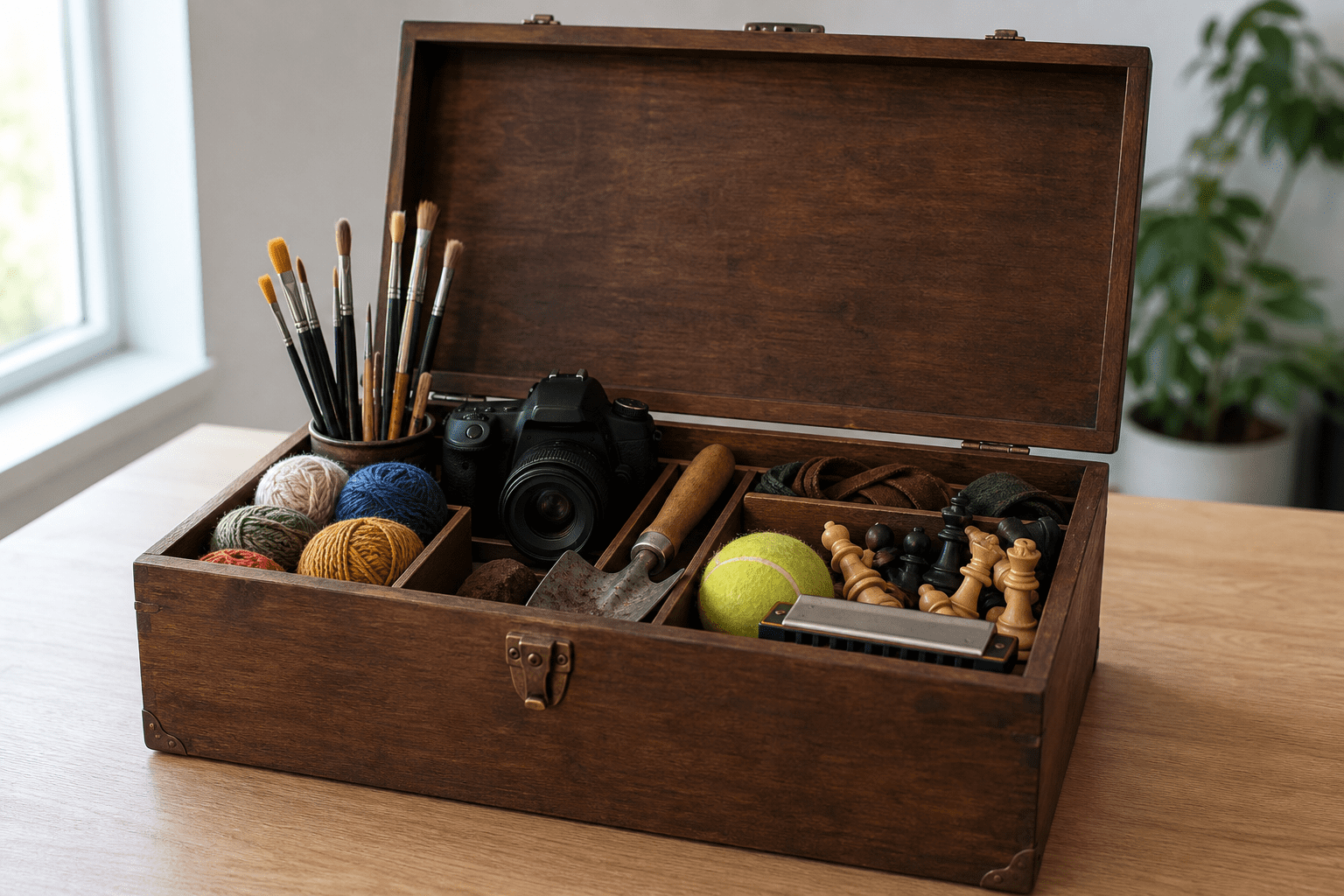
Open wooden trunk holding hobby supplies like paintbrushes, yarn, camera, trowel, chess pieces, and harmonica.

All Hobbies List

If you landed here looking for an all hobbies list, you're probably tired of the same five suggestions everyone hands out: read more, go for walks, try yoga, learn a language, take up running. Useful, maybe, but not the point. The point is to browse widely enough that something actually catches you.

This post is built to be scanned by alphabet letter, so you can jump straight to H for hiking or P for pottery without reading the whole thing. But the list also doubles as a way to notice patterns. Some hobbies are creative, some physical. Some happen indoors on a rainy afternoon, others pull you outside. Some cost almost nothing. Some are deeply social, others quiet and solitary. A few are practical enough to save you money, and a few are unusual enough that you'll spend the first month explaining them to friends.

What Counts as a Hobby

A hobby is something you do voluntarily, outside of paid work or obligation, that involves a skill or interest you choose to keep developing. The voluntary part matters. If you have to do it, it's a chore. If you can drop it and never miss it, it was probably just a passing curiosity.

The other test is whether you return to it. Trying pottery once at a studio party isn't a hobby. Coming back next month, then the month after, and slowly getting better at centering clay, that's the shape of one. Hobbies tend to build through repetition, and most of them reward patience more than talent.

A–Z List of Hobbies

What follows is a broad list of hobbies organized by letter. It isn't exhaustive, no all hobby list could be, but it covers a wide enough range to spark ideas. A: astronomy, archery, aquarium keeping, amateur radio, animation, antique collecting. B: baking, birdwatching, bonsai, board games, bookbinding, beekeeping, blogging, bouldering. C: cooking, cycling, chess, calligraphy, ceramics, camping, coding, cheese making, crochet, candle making. D: drawing, dancing, drone flying, DIY electronics, distance running, digital art. E: embroidery, electronics, e-sports, espresso brewing. F: fishing, foraging, photography (film), furniture restoration, fermenting, flower arranging. G: gardening, gaming, genealogy, graphic design, glassblowing, geocaching.

H: hiking, home brewing, historical reenactment, herbalism, handlettering. I: ice skating, illustration, indoor cycling, instrument repair. J: journaling, jewelry making, jigsaw puzzles, juggling, jazz piano. K: knitting, kayaking, kite flying, karate, kombucha brewing. L: letterboxing, leatherworking, language learning, longboarding, landscape painting. M: model building, metal detecting, magic tricks, meditation, mycology (mushroom identification). N: needlework, nature photography, novel writing.

O: origami, oil painting, orienteering, open-water swimming. P: painting, pottery, photography, podcasting, paper crafts, plant collecting, paddleboarding. Q: quilting, quizzing (pub trivia), quilling. R: reading, running, rock climbing, RC cars, restoration projects. S: sewing, sketching, skateboarding, surfing, scrapbooking, sourdough, songwriting, stargazing. T: table tennis, tarot, tea blending, travel planning, tabletop role-playing games. U: ukulele, upcycling furniture, urban sketching, ultimate frisbee.

V: vlogging, vintage clothing, vegetable gardening, video editing. W: woodworking, walking, writing, weaving, watercolor. X: xylophone, cross-stitch (often filed here for lack of competition). Y: yoga, yo-yo tricks, YouTube content creation. Z: zine making, zumba, zoology (amateur wildlife study).

Hobbies by Category

The alphabet view is good for browsing, but most people choose by category. Creative hobbies: painting, pottery, writing, photography, songwriting, urban sketching, zine making, are the ones that produce something at the end of the session, even if it's just a half-finished page. They tend to suit people who like having proof of where their time went.

Indoor hobbies cover the rainy-Saturday range: reading, puzzles, chess, cooking, knitting, journaling, coding, gaming, model building. They're forgiving of weather and small apartments. Outdoor hobbies, hiking, gardening, cycling, birdwatching, kayaking, camping, running, fishing, climbing, give you weather, terrain, and a reason to leave the house. Many people end up with one of each so the season doesn't decide whether they get to do anything they enjoy.

Cheap hobbies are worth their own mention because cost is often what kills momentum. Walking, bodyweight exercise, sketching, journaling, reading from the library, chess, origami, and birdwatching all start at near zero. You can spend more if you want, but you don't have to.

Then there are the unique hobbies, the ones that make people lean in when you mention them at dinner: bonsai, foraging, amateur radio, cheese making, letterboxing, historical reenactment, beekeeping, metal detecting. They tend to attract people who like a small, specific world with its own vocabulary and community.

Hobbies for Real Life

Hobbies for adults usually have to fit around work, family, sleep, and the rest of life. That means the most sustainable ones tolerate interruption. You can put down a knitting project, a sourdough starter, a half-edited photo, or a half-built shelf and come back to it next week. Hobbies that demand a clean two-hour block every day tend to drop off first when life gets busy.

Stress relief, skill-building, and a sense of identity outside of work are the most common reasons adults pick something up, or come back to something they did as a teenager. A quiet hobby after work can do more for a tired brain than another hour of scrolling.

Lists of hobbies for women and hobbies for men still float around online, mostly out of habit. They're not very useful. Plenty of men knit and bake. Plenty of women weld and fish. The better filter is interest: do you like making things, moving your body, solving problems, being outside, being alone, being around other people? Those questions sort hobbies far more usefully than gender ever did.

Choosing a Hobby That Sticks

The hobbies you keep tend to share a few features. They fit the time you actually have, not the time you wish you had. They match your energy at the end of the day, something quiet if you're drained, something physical if you've been sitting for hours. They're cheap enough to start that the first failed attempt doesn't feel expensive. And they have a low enough barrier that you can do them tonight, not after you've bought a full setup.

When you're scanning hobbies to try, give weight to the ones that sounded interesting more than once. A passing thought is curiosity. A recurring thought is usually worth following. Start small, one session, one cheap tool, one short walk with binoculars, and see whether you want to do it again next week. The hobbies that stick are almost always the ones you returned to before you decided they were "your thing."

The most impressive hobby isn't the goal. The goal is something you'll voluntarily come back to, build a little skill at, and still want to do a year from now. That's a quieter standard than the internet usually sets, but it's the one that actually matters.

Unusual Hobbies Worth a Second Look

Beyond the familiar A-to-Z entries, some pursuits sit in stranger corners of the hobby map, the ones that come with their own vocabulary and a small, dedicated community. Building niche websites and trading links with other site owners is one of those quietly absorbing pastimes, closer to stamp collecting than marketing once the spreadsheets come out. For anyone who enjoys patient, repetitive skill-building with a clear feedback loop, backlink exchange can be a hobby in the same spirit as bonsai or metal detecting. It tolerates interruption, costs little to start, and rewards the kind of person who returns to a project next week rather than abandoning it after one session.

List Of Hobbies Cost Ranges By Category

This table compares typical price ranges for popular hobbies in USD. Rows group options by Hobby Category, while columns break costs down by Complexity Level, from entry-level starter setups through advanced gear and training. Readers can locate a category, follow it across to the relevant complexity column, and read the cell as the expected spending range for that combination.
Hobby Cost Estimates
Hobby CategoryEntry-Level Hobby PricesBeginner Hobby PricesIntermediate Hobby PricesAdvanced Hobby Prices
Arts and Crafts Hobbies$50 – $200$150 – $500$400 – $1,200$1,000 – $3,500
Outdoor Recreation Hobbies$100 – $400$300 – $800$700 – $2,000$1,500 – $5,000
Fitness and Sports Hobbies$50 – $250$200 – $600$500 – $1,500$1,200 – $4,000
Music and Performance Hobbies$100 – $300$250 – $700$600 – $1,800$1,500 – $6,000
Culinary and Gardening Hobbies$50 – $150$150 – $400$350 – $1,000$800 – $2,500
Collecting and Gaming Hobbies$30 – $150$100 – $400$300 – $1,000$800 – $3,000
Prices shown are estimates aggregated from public sources and reflect typical market ranges at the time of publication. Actual costs can vary based on specific equipment choices, brand, location, instructor or class fees, and seasonal timing, so individual quotes may fall outside the ranges listed.

Hobbies List FAQs for Adults Choosing One

What actually counts as a hobby versus a chore?

A hobby involves voluntary participation outside paid work or obligation. It also requires ongoing skill development through repetition, rather than being a one-time attempt at an activity.

What are good hobbies for someone living in a small apartment?

Indoor-friendly options include reading, puzzles, chess, cooking, knitting, journaling, coding, gaming, and model building. These fit limited space and do not depend on outdoor access.

How can someone tell if a hobby will actually stick long-term?

Sustainable hobbies for adults tolerate interruption and allow a return after a week away. They also need to match available time and end-of-day energy, rather than demanding fixed daily blocks.

How can someone start a hobby without buying a full setup first?

Several hobbies start at near-zero cost and require minimal gear, including walking, bodyweight exercise, sketching, journaling, library reading, chess, origami, and birdwatching. These allow trying the activity before committing to equipment.

Which hobbies produce something tangible by the end of a session?

Creative hobbies that result in a finished output include painting, pottery, writing, photography, songwriting, urban sketching, and zine making. Each one leaves a concrete product when the session ends.

What are some outdoor hobbies for adults?

Outdoor options listed include hiking, gardening, cycling, birdwatching, kayaking, camping, running, fishing, and climbing. These range from low-intensity activities to more physically demanding pursuits.

What are unusual hobbies with their own dedicated communities?

Hobbies noted for drawing specific communities and specialized vocabulary include bonsai, foraging, amateur radio, cheese making, letterboxing, historical reenactment, beekeeping, and metal detecting. Each tends to come with its own subculture and terminology.

How should adults choose a hobby without using gendered hobby lists?

Gendered hobby lists are not useful for selection. Interest filters work better, such as making things, moving the body, solving problems, being outside, or being social.

Table of Contents

Recent Posts

Open wooden trunk holding hobby supplies like paintbrushes, yarn, camera, trowel, chess pieces, and harmonica.

All Hobbies List

An A to Z list of hobbies spanning creative, indoor, outdoor, cheap, and unusual options, plus notes on categories and choosing pursuits that fit real adult life.
Read More »
ALL TIME PAGE VIEWS: 23

This page was last updated on 22 May 2026 by u/WebsiteCatalyst.

If you have any questions, try our FAQ.